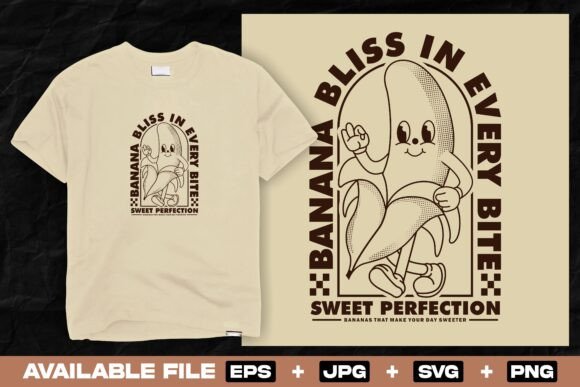
Retro Sweet Banana Cartoon Character Graphics
As a graphic designer with years of experience in branding, marketing visuals, and digital design assets, I’ve come across countless illustrations and clipart that promise to elevate a project. The Retro Sweet Banana Cartoon Character is one such asset that caught my attention for its nostalgic charm and versatility. Its vintage mascot-style design feels like a breath of fresh air in a world dominated by modern minimalism. This fun and cute character could easily become a staple in any creative designer’s toolkit, especially for projects targeting a playful, whimsical audience.
First Impressions: A Nostalgic Visual Mood
The first thing that stands out about the Retro Sweet Banana Cartoon Character is its ability to evoke a sense of nostalgia. The soft curves, exaggerated features, and warm color palette give it a handcrafted feel that feels familiar yet unique. It’s the kind of illustration that could fit into a retro-themed campaign or a modern brand looking to add a touch of personality. The design isn’t too flashy, but it has a distinct visual identity that makes it memorable.
This character would be ideal for small businesses, handmade brands, or seasonal campaigns aiming to connect with a more sentimental or family-oriented audience. It’s also perfect for print-on-demand sellers or Etsy product creators who want to offer something visually appealing without overcomplicating their design process.
Real-World Design Applications
When considering how the Retro Sweet Banana Cartoon Character performs in real design situations, it’s clear that this is a versatile graphic design asset. Whether used in logo design, packaging design, or social media graphics, it adds a friendly and approachable vibe. For t-shirt designs, it can serve as a bold centerpiece or a subtle accent, depending on the layout.
In a product mockup, the character shines as a decorative element that can be resized and recolored to match a brand’s color scheme. It works well in sticker design, Canva templates, and Cricut projects, making it a valuable addition to any design bundle. Its vector format ensures that it remains crisp at any size, which is essential for both print-on-demand and digital marketing materials.
For packaging design, the character can be used as a label or a decorative border, adding a whimsical touch to product boxes or bags. In editorial design or blog visuals, it can break up text and add visual interest without overwhelming the reader. When placed on a website or social media post, it can help create a cohesive visual theme that aligns with a brand’s personality.
Best Uses: Where the Character Excels
The Retro Sweet Banana Cartoon Character excels in large layout areas, hero graphics, and themed collections. It can act as a focal point in a product mockup or a campaign visual, drawing attention while maintaining a soft and inviting tone. It’s also great for printable design projects, such as wall art or stationery, where a simple yet charming illustration can make a big impact.
This character is particularly effective when used as a supporting brand element. It can complement other design elements like serif fonts or handwritten fonts, creating a balanced and cohesive look. For small business branding, it offers a way to differentiate a brand from competitors without sacrificing professionalism.
Caution: Where the Character May Not Fit
While the Retro Sweet Banana Cartoon Character is a great asset, it’s not suitable for every project. In small sizes or crowded layouts, it may lose clarity and become difficult to recognize. It also doesn’t work well with low-contrast backgrounds or minimalist branding, where simplicity is key. For professional corporate materials or modern design projects that require a clean visual hierarchy, this character might feel out of place.
Designers should also consider the context of the project before using it. If the goal is to convey a serious or high-end image, a more refined illustration might be a better choice. However, for handmade businesses or seasonal campaigns, this character can bring a sense of warmth and personality that resonates with the target audience.
Practical Designer Notes
Before using the Retro Sweet Banana Cartoon Character in a client project, there are several practical steps to take. First, test it in black and white to see how it holds up without color. Check the contrast on light and dark backgrounds to ensure visibility. Preview it at different sizes to confirm that it remains legible and sharp.
Place it on real mockups to see how it interacts with other design elements. Test print quality if it will be used for physical products like t-shirts or mugs. Review the file formats—whether it’s an SVG design, PNG design, or another format—to ensure compatibility with your workflow. If transparency is involved, inspect the PNG to confirm that it looks clean and professional.
Finally, always verify the commercial license before using the asset for a client or business project. Make sure it’s suitable for print-on-demand, Etsy products, or digital sales as needed. Comparing it with different font styles can also help determine how it fits within a broader design system.
Conclusion: A Unique Addition to Any Designer’s Library
The Retro Sweet Banana Cartoon Character is more than just a cute illustration—it’s a functional and expressive design asset that can enhance a wide range of projects. Its vintage charm, ease of modification, and vector-based format make it a reliable choice for designers working on brand identity, packaging design, or social media graphics. Whether used in a sublimation design, Canva template, or sticker design, it brings a sense of playfulness and warmth that can elevate a project’s overall aesthetic.
For designers seeking to add a unique touch to their creative work, this character is worth exploring. It’s a reminder that sometimes, the most effective design solutions come from a blend of nostalgia and modern usability. With careful consideration and proper testing, the Retro Sweet Banana Cartoon Character can become a valuable part of any professional designer’s toolkit.